
Benefits of Playing Video Games For Adults
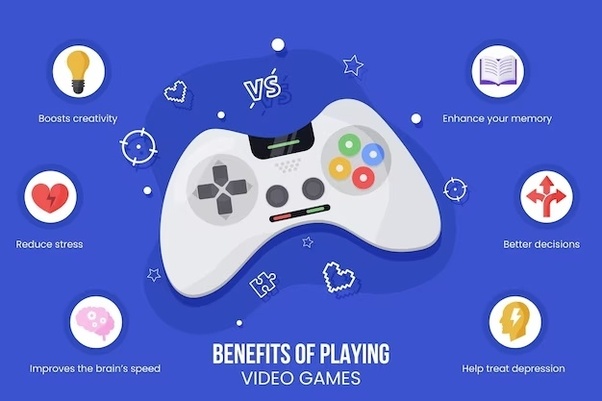
Playing video games can improve various cognitive skills. They can also help people make decisions faster and more accurately than non-gamers. This is especially true if you play field-specific training games.
However, like anything else in life, too much gaming can have negative effects. How many gaming hours are healthy varies from person to person, but it shouldn’t negatively affect your work or social life.
Improved Memory
Video games can provide a strenuous mental workout that helps players improve their visual attention and processing speed, which can benefit their memory. For example, action video games like first-person shooters require players to rapidly respond to features of the game world that appear and move quickly, requiring fast responses from players to successfully navigate the game. These skills may also improve their ability to learn new tasks.
Other video games, such as puzzle and strategy games, can help improve a player’s spatial memory by challenging them to imagine how objects fit into the space around them. This is similar to how a spatial puzzle game like a crossword or jigsaw can benefit a person’s real-life memory by strengthening their ability to visualize space and mentally rotate objects to find the best position for them.
Playing video games can also boost a player’s long-term memory by exercising their hippocampus, which is responsible for turning short-term memories into longer-term ones and controlling spatial memory, such as remembering where you parked the car or how to get to your friend’s house. In one study, NIA-supported researchers found that exposure to rich, three-dimensional video game environments increased hippocampal activity in individuals 60 to 80 years of age more than two-dimensional activities such as playing Solitaire.
However, it is important to note that excessive video gaming can have negative effects on a person’s health, such as low appetite, poor sleep, and depression. To combat these negative effects, a person should limit how much time they spend playing video games, making sure they complete their other responsibilities and exercise regularly.
Improved Spatial Memory
Video games are notorious for their addictive nature, but playing them can help improve your focus and spatial abilities. Visuospatial ability is the part of your brain that helps you recognize objects and their relationships with each other, such as driving or finding your way in a city. A recent study found that players of action video games, such as the popular Angry Birds, made decisions up to 25 percent faster than non-gamers and were more accurate.
This could be because the fast-paced environment of action games forces your brain to quickly process and respond to visual stimuli. Other studies have also shown that gamers who play action games tend to be more skilled at jobs requiring hand-eye coordination, quick decision making and attention to detail.
Playing video games may also strengthen your memory, as it can improve working memory — the ability to hold and manipulate information in your mind. Having this skill is important for tasks like remembering directions or names, and researchers have discovered that people who were avid gamers in their childhoods performed better on a working memory test, even after they stopped playing.
The reason for this is because you are exercising your hippocampus, the part of the brain that converts short-term memory to long-term memory and controls spatial memory. Keeping this muscle in shape can slow down the decline in spatial memory that occurs with age, and it might even protect against Alzheimer’s disease.
Improved Concentration
Video games have been under a lot of scrutiny lately. While many people believe that they make you lazy, harm your brain or ruin your social life, research has shown that video games offer cognitive and physical benefits when played in moderation.
In fact, playing video games can improve your concentration. One study found that those who play action-based video games are better at spatial attention, which is the ability to focus on a target while ignoring distracting stimuli. This ability can help you focus at work or school and is a vital skill in the real world.
Similarly, video games can also improve your problem-solving skills. Many games involve thinking on your feet in a fast-paced fantasy environment and require you to adapt to changing conditions quickly. One longitudinal study found that adolescents who reported playing strategy games exhibited improved problem-solving abilities and higher school grades the following year.
Video games can also help you stay focused in long-term projects and tasks. They force you to stay engaged for hours at a time, which gives your brain solid practice in maintaining focus for extended periods of time. In addition, many video games are designed to be addictive and are highly challenging, which helps you stay motivated and concentrated on completing the task at hand. This can improve your performance at work and at home and help you manage your time more effectively.
Reduced Stress
Although video games are often considered to be a guilty pleasure, they can actually provide many health benefits, particularly when used in moderation. Playing games can help improve cognitive ability, social skills and even slow the aging of the brain.
Gaming can also be a way to relieve stress and anxiety. It can be a form of meditation and allow you to enter a state of flow, similar to what athletes experience when they are in the zone. This can be especially true for fast-paced, violent games that give the player a sense of accomplishment and achievement